
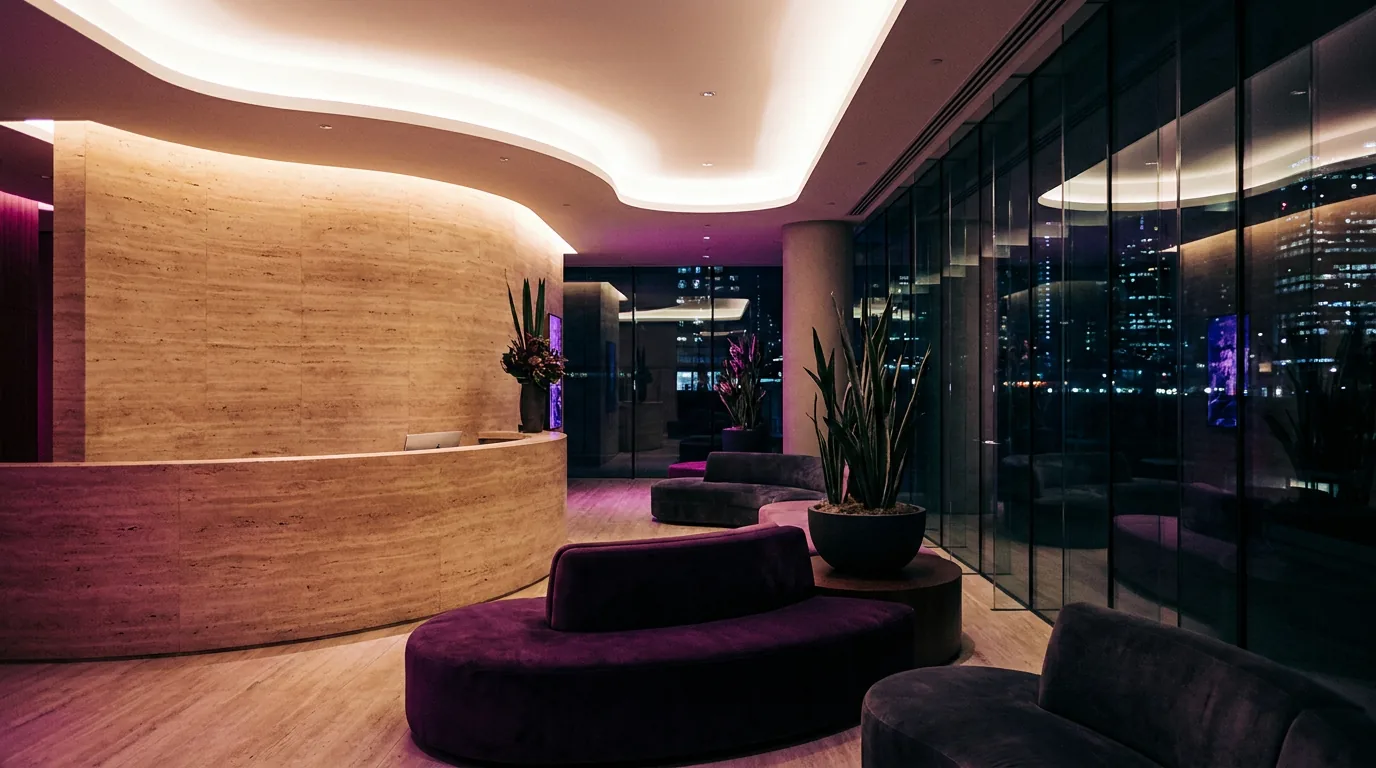
A massage studio loses money twice on the same call: once when nobody picks up because every therapist is behind a closed door, and again when the booking that did happen was the wrong length for what the client actually wanted. Romy fixes both. She turns the caller's own words into the right duration, the right therapist and a real opening — counting the room reset, the couples room and the hot-stone kit before she offers a time — and she never diagnoses, never promises relief, and never lets a caller talk her past a boundary.
of inbound calls go unanswered at the average small business when staff are busy. Your therapists are behind treatment-room doors all day, by design.
of clients book with whichever business responds to them first. A sore back does not wait for a callback — it books the studio that picked up.
of inbound volume lands after hours, which for a massage studio is exactly when people notice how much they hurt.
a year for one full-time front desk in Canada. One person, one shift, and one inconsistent answer to every question about pressure, pregnancy or receipts.
Romy is live on a real line running a full massage-studio build. Push her the way a real caller would. Tell her your shoulders are wrecked and ask for thirty minutes. Ask her what is causing the pain. Ask for the deepest massage she has. Ask her to squeeze you in and just cut the session short. Ask for a couples booking on a Saturday. Ask whether your insurance will cover it. Then ask her for something a massage studio does not offer, and watch how fast the booking workflow ends.
She answers on the first ring, at midnight, on a Sunday, and while every therapist is in a room with the door shut and the phone on silent. This is the same build your studio would get.
No phone needed. Your browser asks for microphone access, then you are straight into a live conversation with the same assistant. The transcript appears as you speak. Try switching language mid-sentence.
Please read before you call. The studio she answers for — Romy Massage Studio, and every therapist, price, room, opening and policy in it — is fictional, and exists only for this showcase. Every booking, deposit, intake form, credit and message she describes happens inside that conversation and nowhere else: no real calendar, card, chart, phone or inbox is touched. She will tell you exactly that if you ask her directly. Nothing you say to her reaches a real business, and nothing she does reaches a real system. On a client deployment, the identical workflow is wired to the studio's own booking, payment and messaging systems.
Most AI receptionists were built for restaurants and dentists and then pointed at wellness. A massage studio breaks them in six specific places, and every one of those breaks costs you either an hour of therapist time, a client, or something considerably worse. Here is the difference, in her actual words.
Nobody rings a massage studio asking for a "seventy-five minute focused treatment". They say their shoulders are killing them, or that they just want to switch off, or that they are sore after a half marathon. Romy turns that sentence into the right length, the right therapist and the right room — asking only the questions that actually change the answer, and never turning a symptom into a diagnosis.
This is where the money quietly is. A caller lists four areas and asks for the cheapest half hour. A booking bot takes the thirty. Your RMT then has a choice between rushing the work and running late into the next client, and the client leaves thinking the studio is average. Romy names the trade-off in one sentence, offers the sixty, and lets the caller choose — which is why her average booked duration goes up without a single upsell script.
Every massage studio gets them, and everybody in the industry knows it. An ambiguous request gets exactly one clarifying question. A clear one gets a flat, unembarrassed refusal, the booking workflow ends there, and nothing is negotiated. If the caller pushes, threatens or harasses, she ends the call and files a manager safety handoff — without arguing, without apologising, and without a therapist ever hearing it. Your receptionist is a person. This part of the job shouldn't be theirs.
Every appointment occupies its listed duration plus the room reset after it, and that reset is not billable but it is absolutely real. Generic booking tools book the treatment window and offer the reset to the next caller. Romy consumes both, checks therapist, room, hot-stone kit, closing time and statutory holiday before she offers a single option, and she will not start a session whose reset finishes after you close.
Pressure preference — her words, never "pain tolerance". Therapist continuity. Language. A gender preference, matched neutrally from your roster and never assumed. Quiet room, fragrance-free, accessible room with transfer space, temperature, music, how much conversation. She captures what is volunteered, applies it next time without being asked, and never presents a preference as a promise about what happens in the room — because consent and pressure belong to the RMT, in the moment.
She will not name what is causing the pain, decide whether massage is safe for someone, interpret a health history, promise relief, recommend a treatment frequency, or tell a caller that firmer is better. Not when pushed, not when flattered, not when the caller insists another clinic already told them. She records the minimum she needs, routes anything uncertain to the free RMT fit call, and escalates the symptoms that need prompt assessment instead of booking them a massage.
Ask any AI receptionist vendor for their forbidden-phrase list. Most do not have one, because most were built for takeaway orders and then pointed at a regulated health profession. Here is ours, in full. Every line on the left is a sentence that costs a massage studio a complaint, a college inquiry, a therapist's trust, or a client. Every line on the right is what your Romy says instead — on every call, at every hour, in every language.
The reset happens after every single appointment. It is not billable, it is not optional, and it belongs to the room as much as the treatment does. Every generic booking tool ignores it, books the treatment window, and hands the next fifteen minutes to somebody else. Romy verifies therapist, room, couples room, hot-stone kit, reset buffer, opening hours and statutory holidays before she offers a single option.
It offers 6:00 to the next caller. The room still has towels on the table and the therapist has not written a note. Somebody finds out at 6:02.
Seventy-five minutes of the room and the therapist for one sixty-minute booking. Romy consumes all of it, then offers 6:15 — the first time that is genuinely free.
Offered on a weekday because the studio closes at nine and the reset lands at 8:45. She works that out before she says the time out loud, not after the client has already said yes.
Sunday closes at six. The treatment ends exactly at closing and the reset does not. She offers an earlier Sunday start or the same length on another day — she does not start a session that ends with your therapist locking up alone at 6:15.
Two tables in one room means one couples booking at a time, two therapists free at the same start, and two separate intakes. She will not split a confirmed couples session across two rooms, and she will never put a stranger on the second table.
A hot-stone session occupies a therapist, a room and a kit. Two kits means two at once, and the third caller gets an honest alternative rather than a booking that cannot happen.
Ten minutes late and the appointment stands, with the hands-on time honestly described as shorter. Beyond that she checks the next booking and the reset before offering a shorter configured length — and past twenty minutes on an hour, she moves it. She never pushes your next client late to rescue the current one.
A quiet room is not the same as a spare room. An accessible room is not a nice-to-have for the client who needs it. Romy holds the character of each room, matches the request to it, and tells the caller plainly when two preferences collide instead of quietly dropping one.
A couples session is two clients, two therapists, one room that exists once, the same start, the same duration, two separate intake forms and two separate consents — plus a kit each if they both want hot stone. Get any one of those wrong and you are apologising to four people at once, on the day.
Romy validates the whole set before she quotes, gives the total and the per-person amount, takes the deposit, and creates one group reference plus one appointment reference per person — so the partner who was not on the call still completes their own intake and their own consent.
And when the two people want different session lengths, she does not hide the constraint: equal duration in the couples room, or two separate rooms and times, with permission. Your therapists never find out at 3 PM that the plan does not work.
Look at what she checked before saying "eleven": two therapists free at the same start, the couples room free for ninety plus its reset, both pressure preferences matched to different therapists, the deposit rule for a couples booking, and the longer change window that applies to it. The 3:00 slot was gone, so she never offered it.
Every massage studio gets the boundary call. Most owners have a story, and most front-desk staff have handled one badly — not through any fault of theirs, but because nobody is trained for it and it arrives with no warning at 9 PM.
And every studio eventually gets the call that should not become a massage booking at all: sudden severe pain, new numbness, a leg that will not take weight, spreading redness, a fever, something that needs a healthcare professional today rather than a treatment table on Thursday.
Romy does not improvise on either one. She does not diagnose, she does not reassure, and she does not book.
One clarifying question, then a flat close. No negotiation, no apology, no booking, no explanation the caller can argue with. If he pushes or gets abusive, the call ends and a manager safety handoff is filed with the number and the transcript. Your therapists never hear it, and your receptionist never has to be the one to say it.
For chest pain, severe difficulty breathing, fainting, signs of stroke, uncontrolled bleeding or a severe reaction, she says one thing: call 911 now, do not attend, follow the operator's instructions. No home advice, no medication named, no routine conversation continued.
For sudden severe pain, new weakness or numbness, a limb that will not take weight, suspected fracture, rapidly spreading redness or swelling, fever with illness, a possible clot, an open wound or a recent major procedure with unresolved restrictions, she does not book a routine massage. She advises prompt assessment by a licensed healthcare professional, and offers an RMT or manager callback only once the immediate concern is addressed.
She does not decide whether massage is safe for anyone. Pregnancy, medications, cancer care, clotting concerns, recent surgery — she records the minimum needed, offers the free RMT fit call, and points the caller to their own healthcare provider when they are unsure.
Booking the hour is the visible part. The revenue is in everything around it: the membership credit expiring in eleven days that nobody mentioned, the cancelled ninety nobody refilled, the deposit nobody took on a couples room, the client who never rebooked after a great first visit, and the missed call nobody returned. All of it is included, at every price.
No menu tree, no "press one". A caller describes how they feel — not a service name — and she resolves it into the right length, the right therapist, the right room and a real opening, asking only what changes the answer.
Balance verified before she states it. One credit per eligible visit, applied only after the client approves. And when a sixty-minute credit is going toward a ninety-minute session, she says the exact top-up out loud rather than surprising anyone at the desk.
Twenty-five percent on every ninety-minute session, every hot-stone booking, every couples session and every group — one deposit per person. Sent by secure link during the call. She never takes a card number by voice and interrupts if a caller starts reading one out.
Cancelling releases the therapist, the room and the kit, and she immediately checks the waitlist for someone who actually fits — right length, right therapist, right room, right window. She never offers a solo cancellation to a couples request, or a hot-stone slot with no kit behind it.
"Cancel my Thursday" almost never means cancel. She separates moving from cancelling before she touches anything, preserves preferences, intake status and credits on a reschedule, transfers an eligible deposit once, and only releases the old slot once the new one is confirmed.
New clients get the secure health-history and consent link before they arrive. Returning clients are asked only whether anything relevant has changed — not to narrate it to reception. She never collects health detail, card numbers or policy numbers by voice.
Fifteen minutes early for a first visit, ten for a couples session, five for a returning client with no changes. Lockers, robes, water, accessible washroom. What to wear. Where to park — without ever promising a space or a price.
No direct billing configured, no promise of reimbursement, no guessing at anyone's annual balance. The receipt with the treating RMT's registration details comes after a completed, paid visit — never before — and she tells clients to confirm their own plan rules with their insurer.
A missed call gets an immediate text: book, change, or ask a question. When they reply or call back, she picks up exactly where the conversation stopped — name, goal, duration, therapist, window, credit — instead of restarting the intake and losing them a second time.
Threes and fours get one therapist and one room each, simultaneous where the grid allows and staggered where it does not, with a deposit per person. Five or more, mobile, hotel, buyouts and corporate chair events go to a human with the full brief, and she never promises staffing, travel or a price.
Discomfort about a boundary, an unexpected symptom, a session that did not go well — the public review request is suppressed and the whole thing routes privately to a manager with the story already written down. She never promises a refund or decides who was at fault.
A short check-in after the visit, aftercare only in the RMT's own approved words, and a review request only with permission. Rebooking comes from the therapist's plan or the client's own stated preference — a monthly relaxation habit is never quietly converted into a treatment schedule.
You know your treatment revenue. You do not know your after-hours demand, your couples-room utilisation, or how many people rang last Tuesday and never got through — because a missed call leaves no evidence anywhere. Romy makes all of it countable and puts it on one page in plain English every week.
Illustrative figures, to show the shape of the report. Yours contains your real numbers, and it lands long before the invoice for the month after it — so you always see the value before you see the bill.
An insurance-receipt RMT clinic and a couples spa have almost nothing in common at the phone. Different questions, different gates, different room and equipment constraints. Pick yours and see what she already knows before we start.
If your clients book a therapist, a room and a length of time, and somebody has to answer the phone to make it happen, Romy fits. Not sure where you land? It takes one call to find out.
Someone finishes work with a neck they can't turn and rings at 8:47 on a Tuesday. Every therapist is mid-treatment behind a closed door with the phone deliberately on silent, because that is what the client in the room is paying for. The front desk left at six. The phone rings out, and nobody leaves a voicemail about a sore neck. By Thursday they are on a table somewhere else. Nothing about that appears on any report you have ever read.
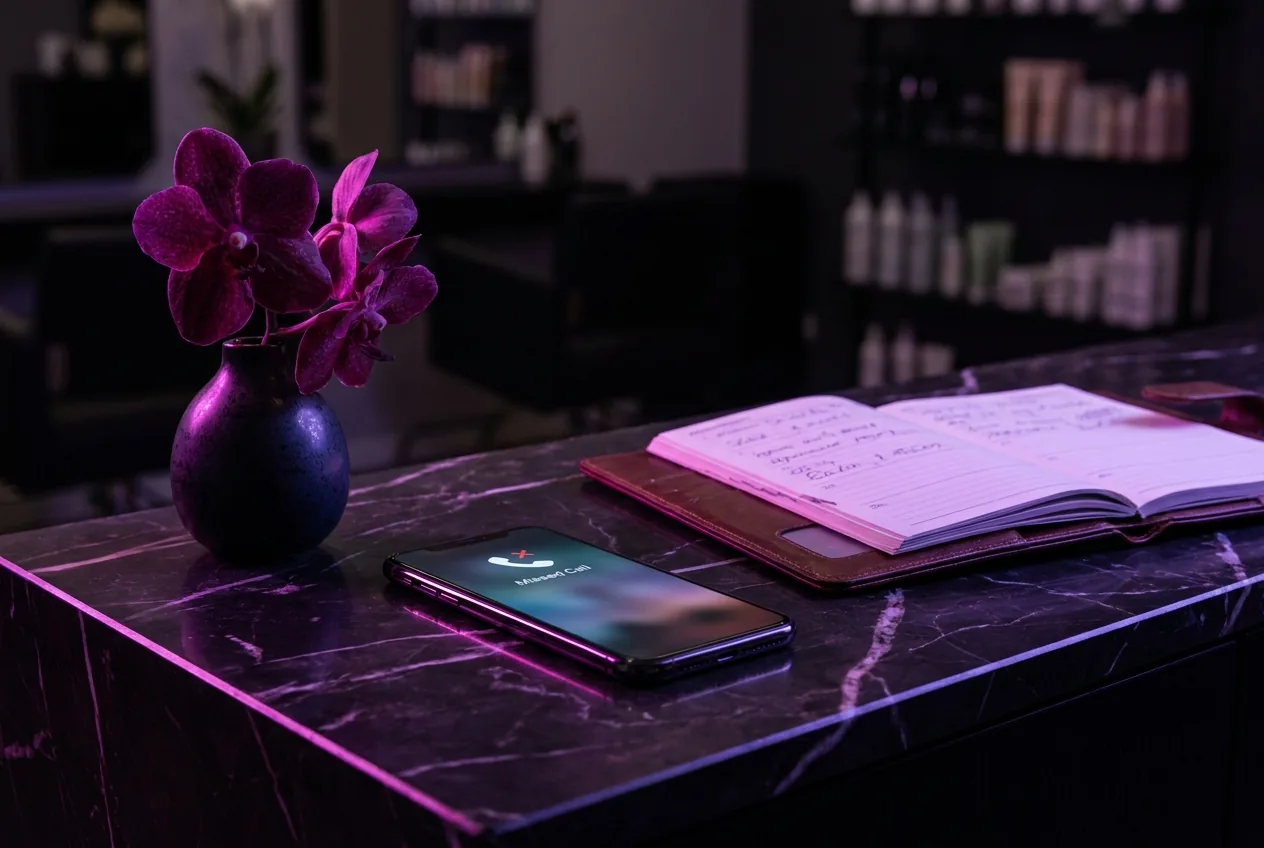
A ringing phone in a treatment room is a refund waiting to happen. So the calls go unanswered by design, and the studio pays for it anyway.
Four areas squeezed into a thirty. Your RMT either rushes the work or runs late into the next client, and the client quietly decides you are fine but not great.
A well-meaning "that's probably just a knot" is a clinical opinion from an unlicensed person, on a recorded line, about a regulated health service.
Your longest, highest-value booking cancels at noon and nobody has a free minute to work the waitlist. That is a hundred and seventy dollars of therapist time sitting still.
A membership credit nobody mentioned, a package with two sessions left and six weeks to go. The client remembers it as your fault, and they are not entirely wrong.
The boundary call always arrives when the least experienced person is on the desk, or when a therapist picks up between clients. It should never reach either of them.
Nobody comparison-shops therapists — they cannot assess that from a website. They book with whoever picked up, understood what they needed, and got them on a table soonest. In this trade the first answered call almost always wins.
Swipe the chart →
Directional, not a measured statistic. The shape is the point, and every studio owner already knows it is true.
Romy picks up, matches the goal to the right length and therapist, checks the room and the reset, sends intake and takes the deposit. The client never dials anyone else.
Someone spots the missed call between clients and rings back. Sometimes you catch them. Often you get voicemail, because they are on the phone with the next studio.
They have spoken to two other places. You are now the third quote, and a third quote is a price comparison, not a booking.
They are booked, deposited and on somebody else's table. You will never know they called.
Website enquiry forms are where the highest-intent leads in your business go to die. They sit in an inbox until somebody has a free minute, which is never. Romy calls the moment the form lands, while they are still on your site, matches the goal to a real opening and books it before they open the next tab.
A real enquiry, the way people actually make it. Not a menu, not a form, not "press one for bookings".
"I've been sleeping badly and my whole upper back is tight. I don't really know what I need."
One question about whether it is one area or several. No interpretation of the cause, no promise about the outcome, no comment on how anyone should feel afterwards. The goal becomes a duration and a therapist fit.
Therapist focus and pressure range, room character, couples room, hot-stone kit, the fifteen-minute reset, opening hours, statutory holidays, and anything already booked in this conversation. Then she offers up to three real times.
Credit applied with permission, deposit by secure link where the policy requires it, secure intake sent, arrival time and preparation in your words, and a full recap before anything is confirmed.
Not a phone tree, and not a separate website chatbot quoting different prices to the same person. One agent, one menu, one set of policies, writing into the booking system you already run.
One call. Your menu, durations and prices, your therapists and what each of them is best matched to, your rooms, your equipment, your reset time, your deposit and cancellation policy, and your boundaries.
We train Romy on all of it and wire her into your booking system. Nothing for you to configure, no dashboard to learn.
We run your real client questions at her — including the ones designed to push her past a boundary. You hear her and sign off before she touches your line.
24/7 monitoring, a weekly report, and improvements included inside your retainer — including every boundary refinement your team asks for.
Two numbers. The sliders start at typical figures for RMT clinics, so move them to yours. Massage client value is repeat value — which is exactly why the missed call hurts more than owners expect.
Every call nobody picked up: after hours, while therapists are in rooms, over the lunch gap, on the second line, on a Sunday.
Not one session. A client on a monthly sixty is roughly $1,440 a year. A membership is $1,320. A couples pair booking three times is $750.
Not every missed call is a new client, so move the top slider to the number you actually believe — the maths is only as honest as the inputs. One in four recovered is deliberately conservative. These are your figures, not a claim about results. CAD.
This is the full list, not a teaser. Other vendors charge more for the useful parts, or leave them for you to configure. We build all of it into your Romy and tune it every month, at every price.
Cheaper AI receptionists exist. For a massage studio, the third and fourth columns are the ones that should decide it.
| Option | Who sets it up and fixes it | Holds a professional boundary | Room, reset & couples math | Monthly |
|---|---|---|---|---|
| Voicemail | Nobody. It just takes a message | Yes, by saying nothing at all | No | $0, and the client is gone |
| Another front-desk hire | You hire, train and cover them | Only as well as you trained them, on their best day | Manually, if they remember | $2,900–$3,750 |
| Human answering service | Them, from a generic script | No — and they will improvise | No | $235–$1,275+ |
| Self-serve AI receptionist app | You do. Scripts, integrations, fixes | Only what you wrote into it yourself | Treatment window only | $150–$400, plus your evenings |
| The AI inside your booking software | You do, and only if you stay on that platform | Generic to their whole customer base | Platform-dependent | Bundled or add-on |
| Romy for Massage Studios, by Lumora | We do. All of it, every month | Built as the core of the product | Reset, couples room, kits, closing time | From $500 |
Swipe the table →
Market ranges in CAD, from Lumora's competitive analysis, August 2026.
You did. They are real and some are decent. Before you put one on a massage studio line, understand what the price difference actually is, because it is not the AI.
Software, and a login. You write the greeting. You type in every service, price and duration. You write the boundary yourself, from scratch, and you find out whether it holds when a real caller pushes it at 9 PM. When it books four areas into a thirty, or tells someone what their pain probably is, you go hunting for the setting that did it.
One call, then we build her. Your menu, your therapists and what each is matched to, your rooms and equipment, your reset time, your deposit and cancellation policy, your escalation path, and a professional boundary written for this trade before we ever meet you. We test her against the questions designed to break her, and your lead therapist signs off before she answers a single call.
In most trades the cheap option is a fair trade-off. In yours the failure modes are a clinical opinion from an unlicensed voice, a boundary call handled badly on a recorded line, and a therapist who finds out at 6:02 that their turnover was sold to someone else. If you are going to put AI on this phone, the boundary and the resource math are the product. Everything else is a calendar.
You are not choosing between two AI receptionists. You are choosing between software you have to run and a front desk we run for you.
Every other AI receptionist hands you a login and wishes you luck. We build Romy for your studio, launch her, watch her, and improve her every month. You never configure anything. Here is exactly what we commit to, in writing, before you spend anything.
We test her against your real client questions — including the ones specifically designed to push her past the professional boundary — and you and your lead RMT sit on that call. She does not touch your phone line until you have heard her voice, read her script and approved both. If the boundary is not exactly where your team wants it, she does not go live.
You do not pay a retainer through the build. The clock starts on go-live. After any initial term it is month to month with simple notice, you keep your phone number, and you see the weekly report of calls answered and hours booked long before you see the invoice for the month after it. If she is not earning her keep, you will know from your own numbers first.
New therapist. A price change. A room taken out of service for a week. A policy you want tightened after one call you did not love. A phrase you never want her to use again. You send us a text and we change her — boundary refinements included, at no extra cost, because that is the part that actually matters here. No configuration screens, no ticket queue, no change fees, no waiting for a release.
We would rather you tested her than read a quote you cannot verify. The number at the top of this page is live. Call it, push her past the line on purpose, and judge us on what she does.
Think of it the way a clinic thinks about managed IT. Nobody hires a person to run their phone and email systems; they pay a company to just handle it. Same idea. The AI is the cheap part, and anyone can rent a voice. What you are paying for is the build we do for your specific studio, the massage-trade knowledge we already have so you are not teaching us your own business, the boundary we have written and pressure-tested before you arrive, and the people who stay on it after launch instead of pointing you at a help centre.
Your menu, durations and prices, your therapists and what each is matched to, your rooms and their character, your equipment, your reset time, your deposit and cancellation policy, and your escalation path.
What she may say, what she must never say, what routes to a manager, and what ends the call and files a safety handoff. This is the part we spend the most time on.
We connect your booking system, map every service, therapist, room and buffer, and prove a booking she makes lands exactly where it should. You never touch an API key.
We run adversarial calls at her: insistent, flattering, in a hurry, inappropriate, convinced somebody already said yes. Anything that gets through gets fixed before she goes live.
24/7 monitoring. If she stops answering at 2 AM on a Saturday, that is our problem to catch and fix, not yours to discover on Monday morning.
New therapist, a price change, a room out of service, a phrase you want removed. You send a message and we update her. No ticket queue, no change fee, no dashboard.
Calls answered, hours booked, average duration, therapist and couples-room utilisation, credits redeemed and expiring, no-shows, escalations, and what clients asked for that you do not offer.
We read what she was actually asked, find where she was clumsy or too cautious, and improve her. She is better in month six than she was on the day she launched.
A front desk hire costs $35,000 a year, works one shift, speaks one language, and improvises under pressure.
Romy costs a fraction of that, works every hour you are open and every hour you are not, and holds the same line on call four hundred as on call one.
You trained for the work in the room. Somewhere along the way you became the receptionist, the scheduler, the person answering pressure questions at 10 PM, and the only one who can be trusted to handle the call nobody else wants. That is not a business. That is a job you built for yourself and cannot leave.
Romy takes the part that never needed you, and takes it without ever putting a clinical word in your therapists' mouths. The phone stops interrupting the treatment room. Sunday stops being admin. Every booking arrives at the right length with intake already done. And the callers you were quietly losing every week start showing up in the calendar instead.
You built your expertise in bodywork. That is your specialty. It is not your job to also become an AI expert. That part is ours.
Every plan includes the build, the boundary work with your lead therapist, the integration, the monitoring, the weekly reporting and unlimited changes within your setup. Plans differ by call volume, how many systems we connect and how much of our time you need — never by features. Month to month after any initial term, and you keep your number.
Extra minutes $0.50 · minutes reset monthly · pay annually and save 10% · month to month after any initial term, and you keep your number.
There is no cheaper tier. A managed front desk on a regulated health-service line costs what it costs, and doing it badly is considerably worse than not doing it at all.
No, and the design is built around that rather than bolted onto it. She will not name what is causing someone's pain, decide whether massage is safe for them, interpret a health history, promise relief, prescribe a treatment frequency, or suggest that firmer pressure is better. When a caller pushes — and they do — she says so plainly and offers the free RMT fit call instead. Your lead therapist writes and approves that boundary before she goes live, and any refinement afterwards is a text message to us at no cost. The best way to satisfy yourself is to call the number at the top of this page and spend two minutes trying to get her to cross it.
An ambiguous request gets exactly one clarifying question: "Are you asking about a professional RMT treatment?" A clear one gets a flat close — "We provide professional RMT services only, and I can't help with that request" — and the booking workflow ends there. Nothing is negotiated, nothing is apologised for, and no appointment is taken. If the caller threatens or harasses, she ends the call and files a manager safety handoff with the number and the transcript. Your therapists never hear it, and nobody on your team has to find the words in the moment.
That is one of the main reasons she exists. She maps the goal to a duration using your own rules — one compact area to your short session, one or two areas to the mid length, several areas or a broad relaxation goal to the long one. When a caller lists four areas and asks for the cheapest thirty, she names the trade-off in one sentence and offers the sixty, then lets them choose. Owners typically notice average booked duration moving before they notice anything else.
She consumes the listed duration plus your turnover as a single block, every time. She checks the therapist, the room, the couples room, any equipment the service needs, your opening hours and statutory holidays before she offers a time — and she will not start a session whose reset would finish after you close. A late arrival gets kept, shortened or moved based on the next booking; she will never shorten intake, consent, treatment or the reset to rescue a schedule.
Yes, and it is the workflow that breaks most front desks. She checks two therapists free at the same start, the couples room free for the full equal duration plus its reset, both pressure and therapist preferences matched separately, a kit each if they both want hot stone, and the deposit and change window that apply to couples. She quotes the total and the per-person amount, creates one group reference and one appointment reference per person, and sends each person their own intake and consent — because one partner's consent is never the other's.
She verifies the balance before she states it, applies one credit per eligible visit only after the client approves, and says the exact top-up out loud when a shorter credit is going toward a longer session. She surfaces sessions remaining and the expiry date together, and mentions a membership only when the client's own booking pattern makes it cheaper — once, with the reason, and never again if they decline. Expired, frozen, shared, transferred or refunded credits always go to a human.
Honestly, which is the important part. She tells callers whether direct billing exists at your studio, never promises reimbursement or guesses at anyone's remaining coverage, and explains that the RMT receipt with the treating therapist's registration details comes after a completed, paid visit. She points clients to their own insurer for plan rules and referral requirements, and she never collects a policy number, health-card number or card number by voice.
Call the number at the top of this page and judge for yourself. Romy uses premium natural voices under 800ms with barge-in, so clients can interrupt and talk over her the way they would with a person. You choose and approve her voice, her greeting and her script before she ever touches your line.
She does not book a routine massage over it. For emergency signs — chest pain, severe breathing difficulty, fainting, signs of stroke, uncontrolled bleeding, a severe reaction — she gives the 911 instruction, tells them not to attend, and stops the routine conversation. For sudden severe pain, new weakness or numbness, a limb that will not bear weight, suspected fracture, rapidly spreading redness, fever with illness, a possible clot or an open wound, she advises prompt assessment by a licensed healthcare professional and offers a callback afterwards. She never says whether massage is or is not safe for that person.
Square Appointments is what we are live on today. She reads real availability by service and by therapist, then writes the booking during the call. If you run a spa-specific platform, tell us which one and we will confirm what is possible before we promise you anything — and where an integration exists, we build it at the same price, with no integration surcharge. Some platforms are open and some are closed, and we would rather tell you the truth up front than sell you something and hand you a message-taker.
As little as 5 business days once we have your menu, prices and access. A single-location studio is typically 5 to 10 days, and a group 2 to 4 weeks. Billing starts on the day she goes live, not the day you sign.
We collect only what a booking needs, disclose AI use and call recording, store credentials securely, and never sell your data. You own it. She refuses card numbers, health-card numbers, insurance policy numbers and health histories by voice and redirects them to the secure intake form. Studios holding personal health information carry obligations beyond general privacy law, so we scope that explicitly on the call before anything is built — we would rather tell you exactly what is and is not in scope than imply a certification we do not hold.
No, and in a busy studio we would argue against it. She takes the calls that do not need a person: hours, prices, straightforward bookings, reschedules, package and credit questions, arrival logistics and the same ten questions. Your team gets that time back for clients in the building. Complaints, injuries, complex plans and anything off-script transfer with a written summary. You decide exactly where that line sits and we build it there.
Effectively all of the ones your clients use — Portuguese, Mandarin, Cantonese, Arabic, Vietnamese, Korean, Spanish, French, Farsi, Russian, Ukrainian, Polish, Punjabi, Hindi, Tagalog, Italian and dozens more. She detects the language from the first sentence, answers in it, and switches mid-call if the caller does. The professional boundary is identical in every language. Your transcripts, notes and reports always come back in English.
Because you never have to use this one. Most tools hand an owner a login and leave them to configure it, which is exactly why they end up unused — and in your trade an unconfigured boundary is not a wasted subscription, it is a liability. There is nothing here for you to set up, learn or maintain. We do the build and we do the changes. If you ever find yourself opening a dashboard, we have failed at our job.
Yes. Month to month after any initial term with simple notice, and you keep your phone number. If she is not booking hours, you will see it in your weekly report long before you see it on your invoice.
Book a free 30-minute call. We will look at how your bookings actually come in, walk through the professional boundary with you, recommend the right plan, and send your proposal within 48 hours. Sign, and we start building Romy for your studio.
Already a client? Refer a studio and earn a discount on your retainer.
Romy is built and run by Lumora Intelligence. Voice is where we start. Ask us what else we do.
 Romy
Romy